
Home / Industries / Landfills & Composting
Manage the biological load where waste is received, handled and stabilized. Bloom BioCleanse gives landfill and composting teams a route to address organic odor sources, support aerobic decomposition and assess improvements in day-to-day handling. Start with the zone creating the most operational pressure.
Explore the product details or choose an application below.
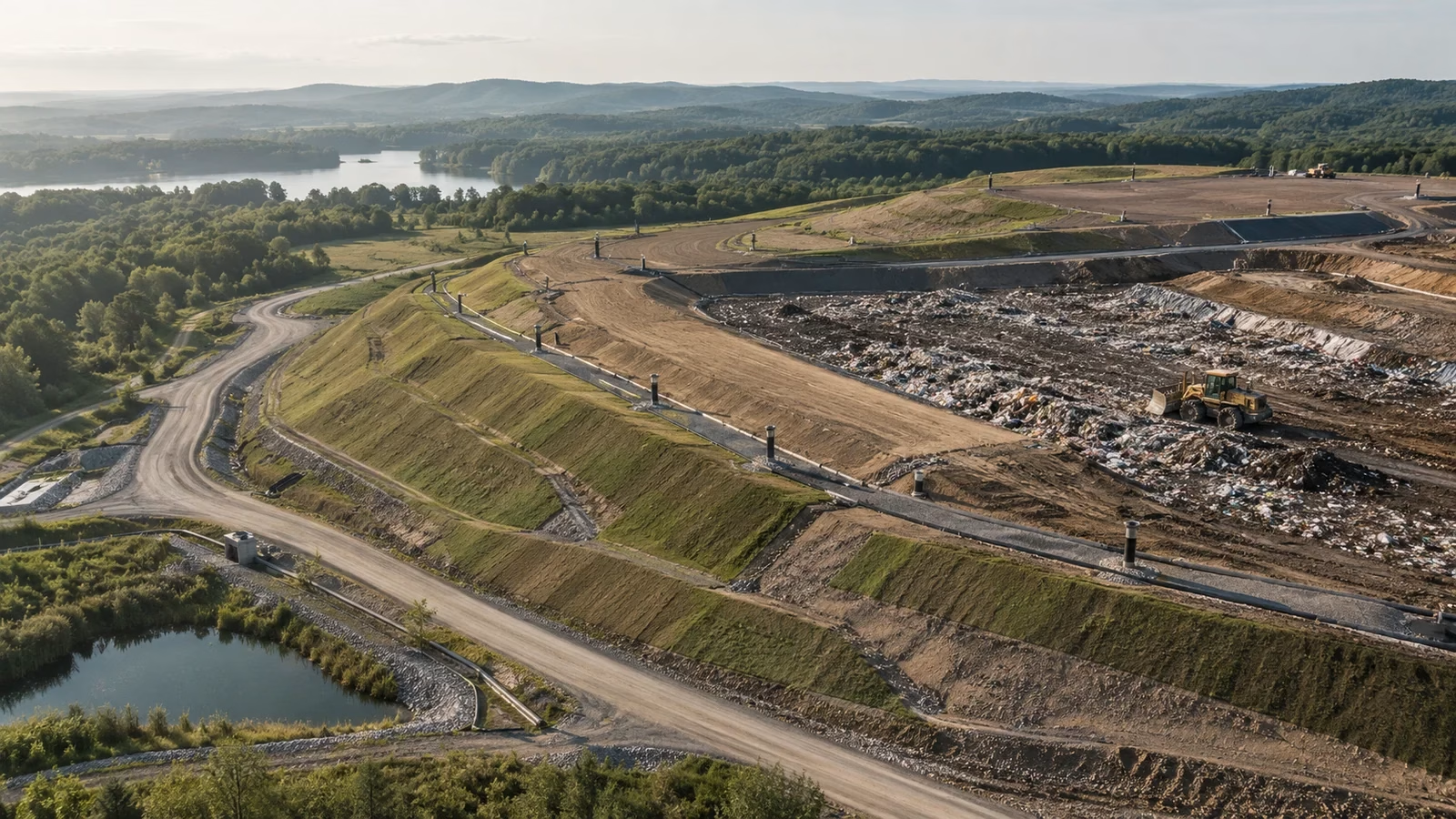
Illustrative environment · Active landfill faces and odor hotspots
Fresh organic waste, exposed tipping areas and localized accumulation can create odor pressure near active operations and site boundaries.
Map recurring source zones and apply BioCleanse through a defined surface-treatment program that fits the site’s working-face and cover practices.
Separate active-face organics, cover areas and isolated hotspots. Treatment access and contact differ across each.
A surface biological program operates alongside established cover, gas collection and engineering controls. A reduction in odor does not establish a change in subsurface gas or heat.
If methane is an objective, use a defined baseline and direct measurements suited to the location and time period.
Organic films and food residues can create odor before waste reaches final treatment. Extend a defined BioCleanse program to compatible non-food-contact handling surfaces and storage zones, alongside sorting, drainage and routine cleaning. Track storage time, odor and cleaning demand.
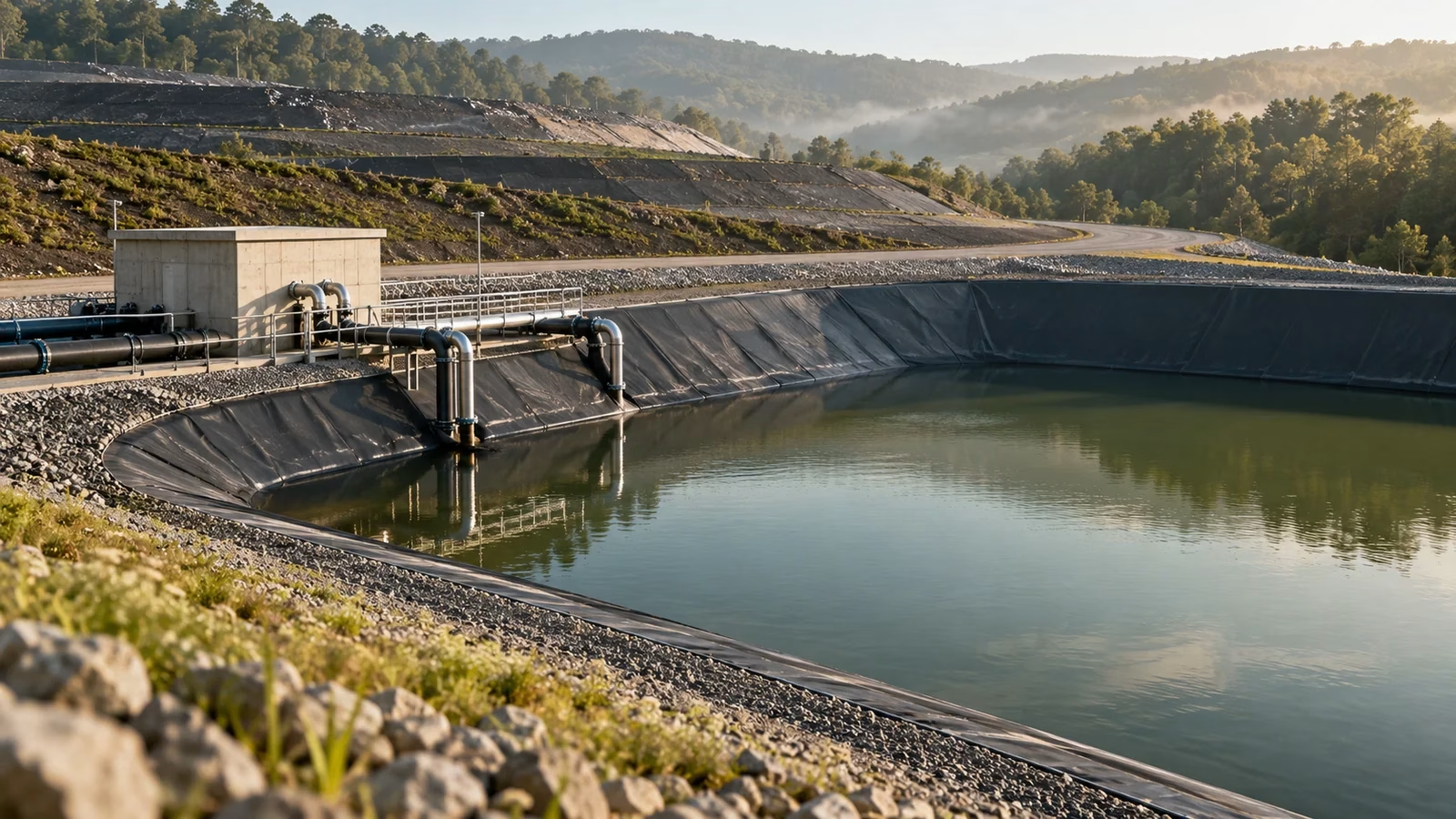
Illustrative environment · Leachate zones and liquid handling
Organic-rich liquids and exposed interfaces can produce odor and add variable loads to downstream treatment. Mineral constituents and persistent contaminants may require separate treatment.
Qualify BioCleanse for the biodegradable fraction at a selected leachate zone, holding point or recirculation route, using site chemistry and downstream needs to set the scope.
Review leachate age, variability, salinity, ammonia and inhibitory substances. A visually similar liquid may have very different biological treatability.
BioCleanse does not remove grit or biodegrade metals. The treatment train must address those components separately.
Agree endpoints that matter to the on-site or off-site treatment route, including solids and oxygen demand.

Illustrative environment · Composting centers and windrows
Food waste, green waste and mixed organic feedstocks can compost unevenly when moisture, porosity or nutrient balance vary. Oxygen-limited pockets can produce odor and slow stabilization.
Apply BioCleanse within a managed windrow or composting program, pairing biological distribution with feedstock preparation, turning, moisture control and temperature tracking.
Particle size and carbon/nitrogen balance influence both contact area and air movement. Blend wet and dry materials to maintain a workable structure.
Liquid distribution alone does not ensure oxygen reaches the windrow interior. Turning or engineered aeration, drainage and moisture management remain central.
Different feedstocks mature at different rates. Release finished compost against the operation’s quality measures rather than a fixed calendar promise.
Suitable plant residues, food waste and mill byproducts may enter a managed composting program after composition and quality review. Match preparation and treatment to the receiving process; material directed to a sealed digester follows the separate AmplyX pathway.
The program starts with the outcome you need to improve. The measures keep that objective visible.
Focus on active tipping faces, exposed organic residues, leachate interfaces and storage areas. A defined treatment zone makes changes in odor and operator workload easier to assess.
Combine biological treatment with moisture, porosity, carbon/nitrogen balance and aeration. The goals are more consistent decomposition, manageable ammonia odor and a stable finished material.
Track incoming material, treatment conditions and output quality together. This connects the biological program to site throughput, turning, rehandling and customer acceptance.
Where emissions are a project objective, measure the relevant gases directly. Odor reduction, methane changes and finished-compost quality are separate outcomes that deserve separate measures.
A spray, mixing or recirculation program places BioCleanse in contact with the material being managed. Distribution and contact depend on the waste matrix and site equipment.
Oxygen, moisture and porosity support aerobic decomposition. Windrow management and site operating controls remain essential to preventing oxygen-limited zones.
Assess the starting feedstock, temperature and oxygen profile, decomposition behavior and finished-material stability. Match treatment to the actual bottleneck.
Reported results belong to the conditions in which they were measured. Explore the source notes to understand how each finding relates to your application.
Moisture · oxygen · temperature · feedstock balance
The reviewed composting protocol consistently ties decomposition to moisture, aeration, temperature and carbon/nitrogen balance, with different maturation schedules for different residues.
Legacy supplier composting reference, pages 2–7. Historical recipes use earlier supplier identities. They inform process design, not a current-product dosage or guaranteed cycle-time reduction.
Product-specific field validation
Bloom’s science review identifies direct methane flux comparisons at treated and untreated waste zones as a priority for establishing product-specific performance.
Internal scientific synthesis and evidence assessment. No universal methane percentage is supported by the reviewed record; unrelated published biological studies are not Bloom outcomes.
The intended role is biological treatment of odor-generating organic material. The program therefore considers the source material, contact conditions and measured odor trend together.
Yes, the assessment is designed around the site’s existing operating controls. Any surface or organic-treatment program must fit access, cover, gas management and engineering requirements.
A suitable feedstock mix, adequate moisture, porosity and oxygen, even treatment distribution, and disciplined temperature and turning records. Biology is one part of that managed process.
No. Odor compounds and methane require different measurements. Bloom’s reviewed materials identify direct product-specific field methane evidence as a development priority, so the website does not assign a universal methane-reduction percentage.
Cycle time depends on feedstock, particle size, moisture, aeration and the required finished-product quality. A site program can assess time to maturity and turning effort against a comparable baseline.
Choose an area with a recurring problem, clear access and a measurable boundary: a working-face zone, leachate interface, windrow or organic handling point. Record the incoming load and operating conditions so the comparison is useful.
Share the application, current conditions and the problem that matters most. We identify the relevant product and technical information.
Agree the application, baseline, protocol, responsibilities and commercial terms around a defined operating objective.
Review the relevant performance and operating data, then determine whether the result supports a broader deployment.
Start with the operating challenge. We’ll connect you with the relevant product, application and next technical discussion.