
Home / Industries / Aquaculture & Livestock
Better aquatic production starts with the water. Better livestock operations also depend on the environment around the animal. BloomBio brings distinct products to aquaculture water quality, manure and odor management, hoof-care routines and drinking-water systems—with the right application and operating measures for each.
Explore the product details or choose an application below.
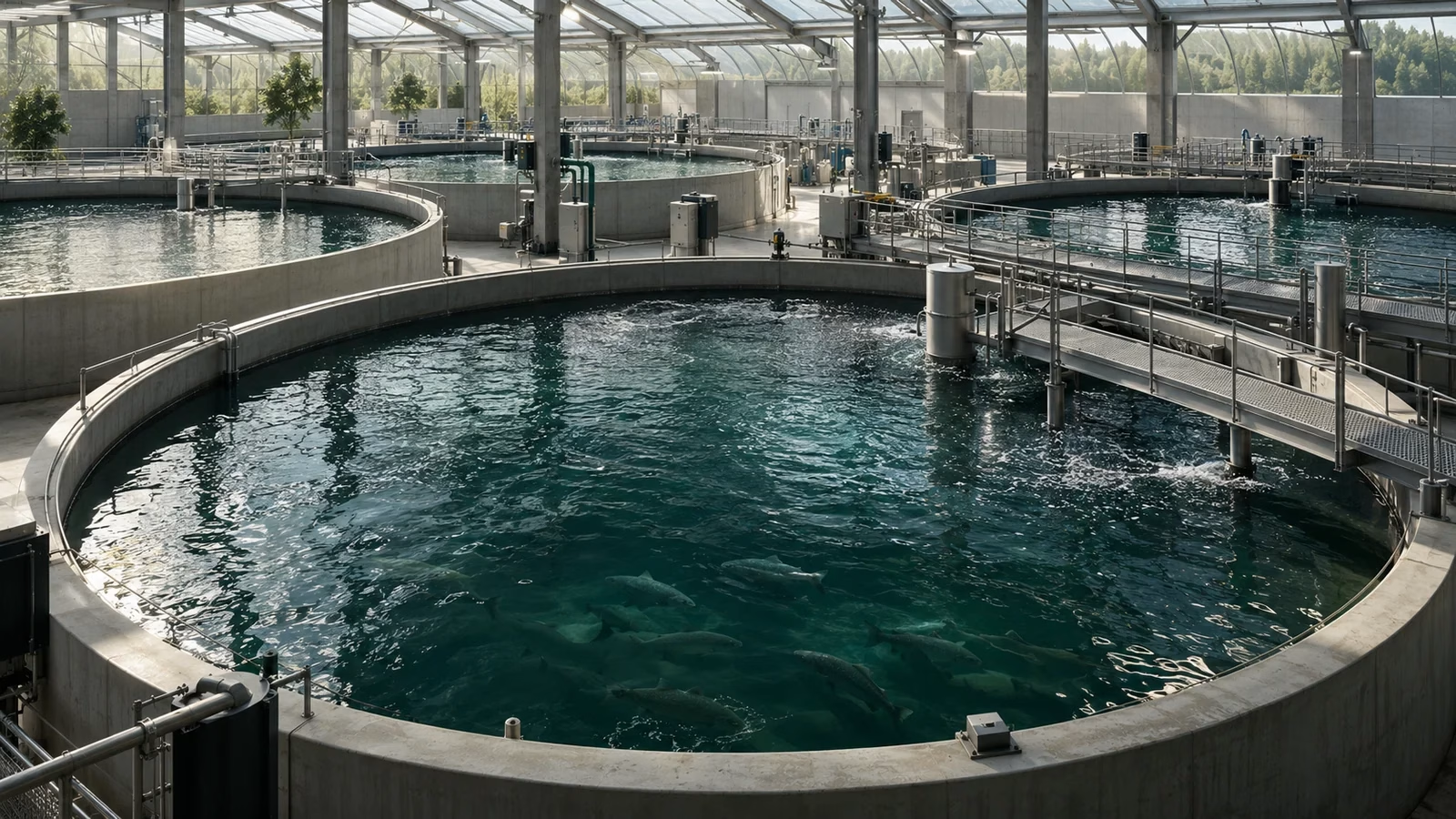
Illustrative environment · Aquaculture
Ammonia and nitrite fluctuate as biomass and feed loading change. Poorly controlled water conditions make production less predictable, while inefficient feed conversion raises the cost of every kilogram harvested.
AquaHealth supports water-quality management in hatcheries, ponds, tanks and recirculating systems. Build the program around species, water volume, biomass, feed rate and existing filtration or aeration. The company literature also positions beneficial biofloc development as a way to turn organic nutrients into microbial biomass within suitable systems.
Freshwater applications include tilapia production, hatcheries, grow-out ponds and tanks. Recirculating and saline systems require specific review of species tolerance, salinity, alkalinity and treatment design. The tilapia results below should not be assumed to apply to shrimp or every finfish species.
Review chemistry alongside feed input and biomass. A water reading alone does not show whether a production program is economical; feed conversion, growth and harvestable biomass complete the picture.
The AquaHealth literature describes microbial biomass developing within the aquatic environment. Where biofloc is appropriate, assess it as part of the farm’s aeration, solids and feeding strategy. Product use does not remove those operating requirements.
The tilapia deck reports feed conversion of 0.81 in the treated group versus 1.09 in the control, and weight gain of 37.63 versus 27.42 g per fish. These are results from that reported evaluation, not a promise of the same result in another facility.
Feed conversion and growth, viewed together ↗ — review Science & Results for the original source.
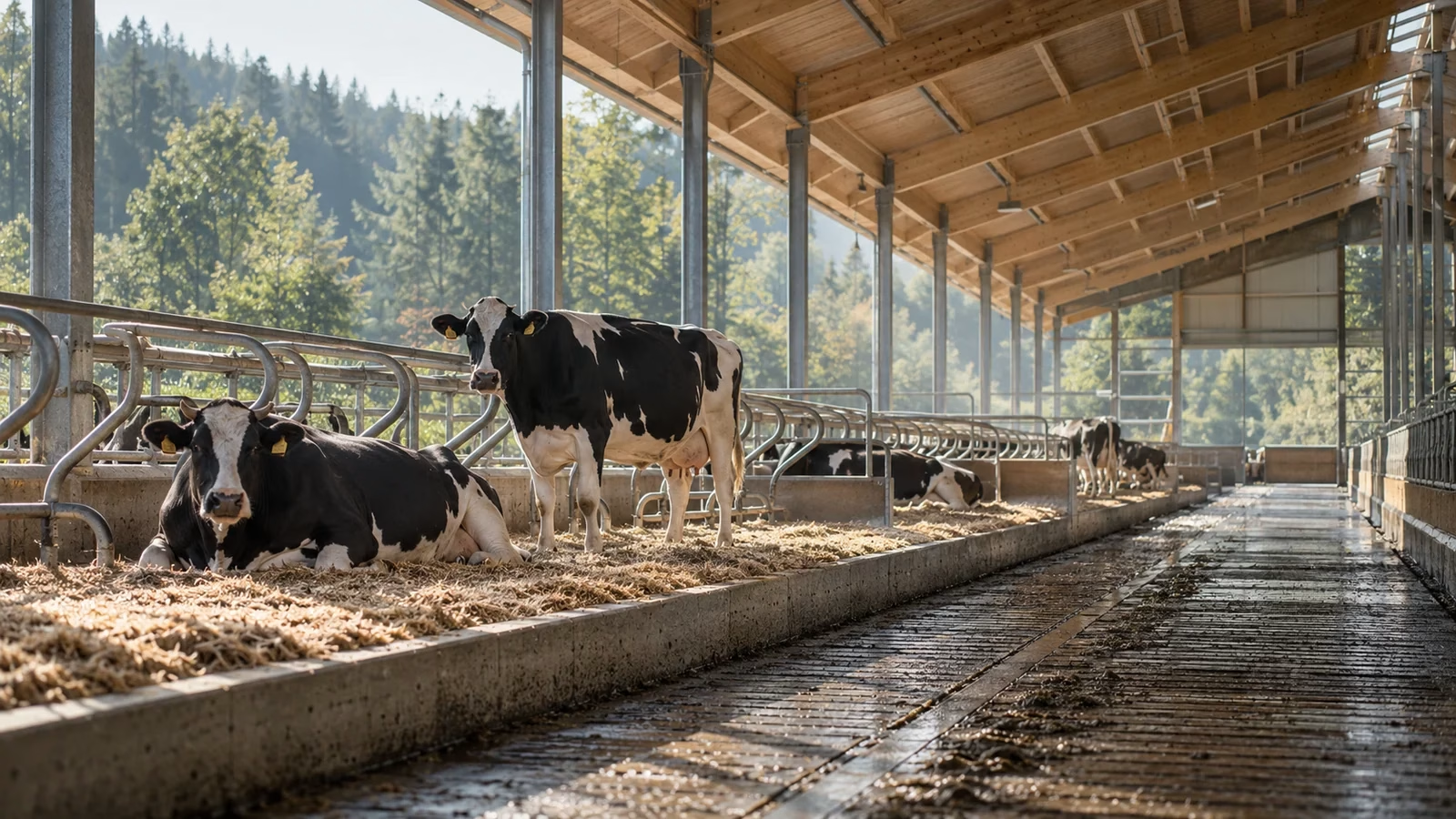
Illustrative environment · Livestock environments
Manure accumulation, ammonia, organic odors and wastewater loading create daily pressure on animal-facility teams. The same waste stream may affect barn conditions, storage, pumping and downstream treatment.
Bloom BioCleanse supports biological treatment of biodegradable manure and associated organic loading. Site planning identifies the main odor and waste sources, then selects a spray, manure-treatment or wastewater-dosing approach suited to the facility.
Prioritize manure areas and identified odor sources. Application planning accounts for animal exposure, ventilation, worker practices and cleaning schedules so biological waste treatment fits the existing operation.
Treat biodegradable material where it collects or enters the wastewater process. Lagoon depth, mixing, retention time and oxygen conditions affect the available application choices and the response to monitor.
Organic material sent to composting, open holding systems or a sealed digester has a different operating objective. BioCleanse fits environmental waste treatment; a qualified sealed digester should be assessed through the AmplyX pathway.
Compare odor and waste measurements with cleaning effort, hauling needs and downstream treatment burden. Establish the facility baseline before attaching a savings figure to the program.
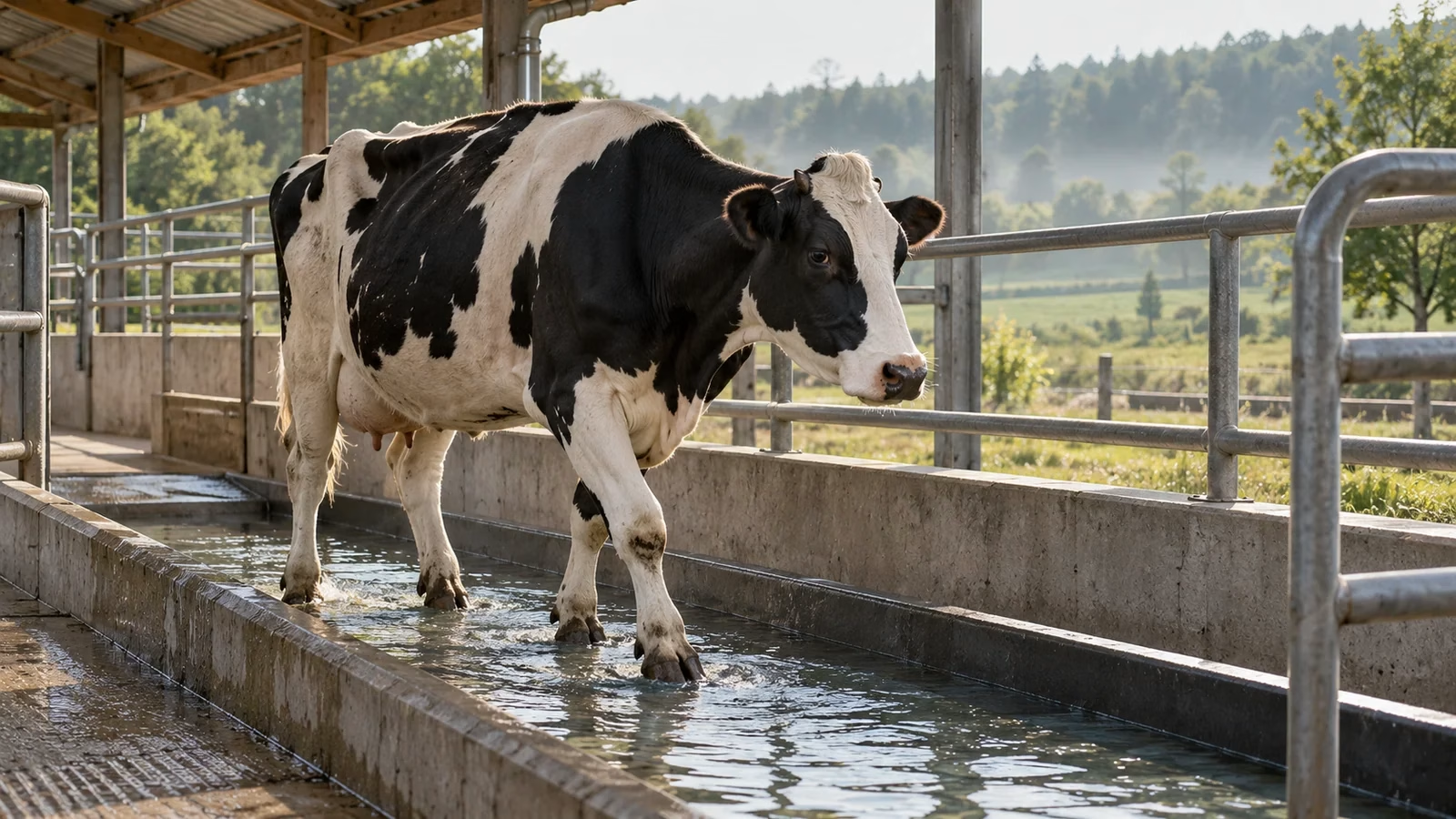
Illustrative environment · Hoof care
Herd foot-care routines can become difficult to sustain when facilities, animal flow and staff responsibilities are not aligned. Producers need a practical program that is easy to run, record and review.
BloomTread is the portfolio’s dedicated hoof-care formulation for qualified footbath, walk-through and approved direct-use programs. Match the route to herd type, facility layout and the veterinary hoof-care plan.
The portfolio identifies dairy, beef, feedlot, sheep and goat programs. Walk-through facilities and individual-use arrangements should be reviewed separately because animal movement and exposure differ.
Agree the approved product instructions, bath configuration, application frequency, replacement criteria and team responsibilities before deployment. Keep records that the herd manager and veterinary team can review.
Mobility and hoof-condition observations belong within the established veterinary program. Market-specific product instructions and veterinary direction determine permitted use.
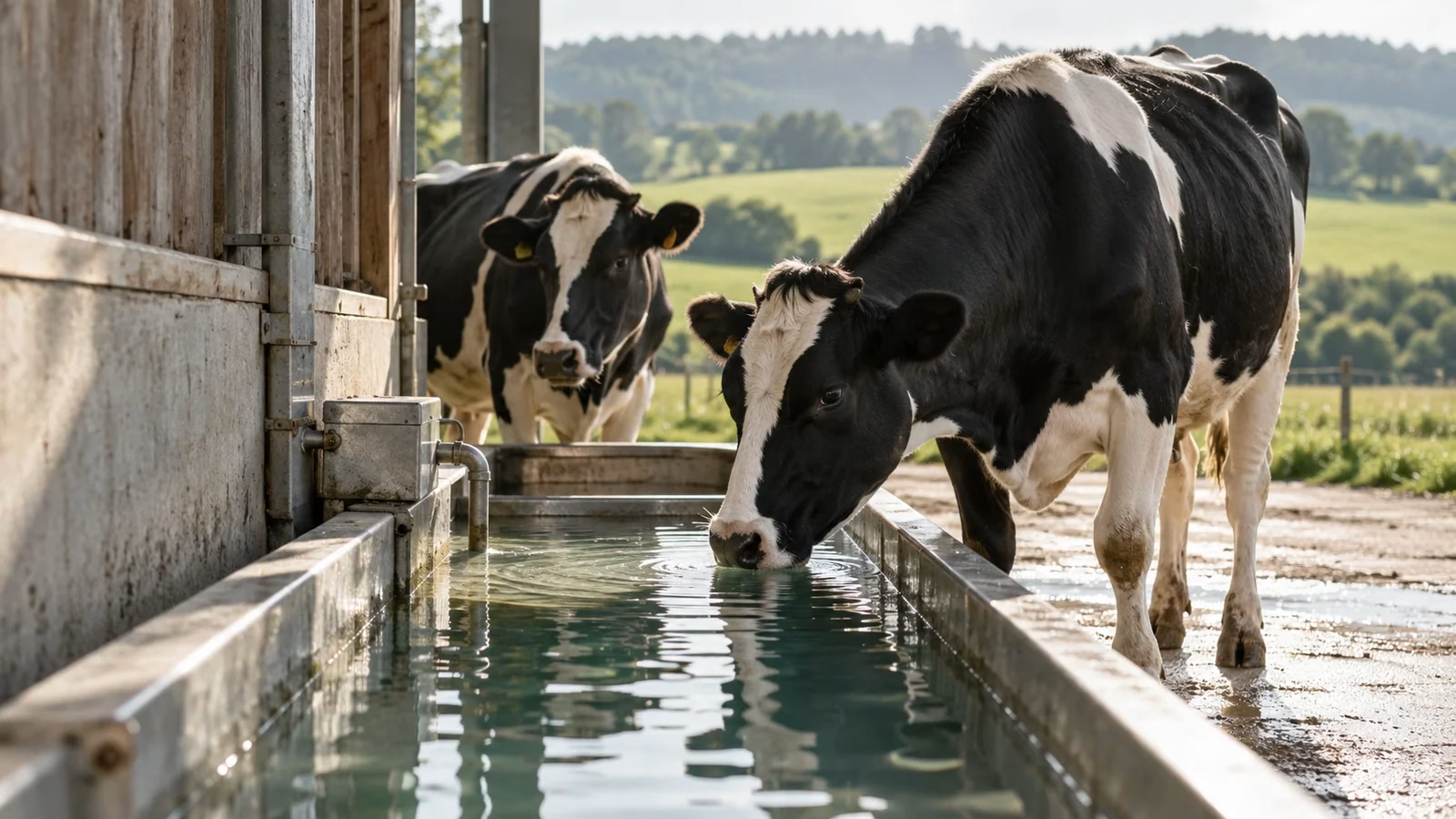
Illustrative environment · Drinking-water systems
A herd or flock water program has to work across source water, storage, dosing equipment and delivery points. Inconsistent system management makes a whole-operation routine harder to control.
BloomWell is the dedicated livestock drinking-water product, intended for qualified central-water and trough dosing programs. Review species, system capacity, existing water treatment and the approved local use before selecting the operating protocol.
The current portfolio includes cattle, sheep, goats and poultry water systems. Central dosing and individual trough arrangements have different control points and should be planned for the actual facility.
Provide the team with source-water information, cleaning practices and any other products used in the system. These details support a compatibility review and a usable operating plan.
Confirm product instructions, market availability, safety and veterinary requirements before use. Product quantity and frequency belong in the approved species- and system-specific protocol.
The program starts with the outcome you need to improve. The measures keep that objective visible.
AquaHealth programs focus on ammonia, nitrite and the biological conditions that influence aquatic production. Connect water readings to feeding, growth and harvest outcomes.
Bloom BioCleanse targets biodegradable manure and the organic material associated with ammonia and odor. Focus treatment at the barn, holding area or wastewater point creating the greatest burden.
BloomTread and BloomWell fit separate footbath and drinking-water workflows. A defined protocol gives teams clear application points, responsibilities and records.
Track feed conversion and growth in aquaculture; odor, organic loading and handling effort in animal facilities; and routine adherence and system condition in hoof-care and water programs.
Aquaculture water, manure treatment, hoof baths and drinking-water systems have different requirements. Product selection starts with the specific operating environment rather than a universal animal-health claim.
AquaHealth is positioned around microbial water-quality management and beneficial biofloc. BioCleanse supports biodegradable waste treatment. BloomTread and BloomWell use their own qualified application routes.
Record the baseline, application details and day-to-day operating conditions. Review biological, production and cost measures together so product performance can be separated from changes in feed, stocking, ventilation or water management.
Reported results belong to the conditions in which they were measured. Explore the source notes to understand how each finding relates to your application.
Reported FCR: treated vs control
The AquaHealth deck reports a feed conversion ratio of 0.81 in the treated group and 1.09 in the control. Lower feed conversion means less feed input per unit of weight gain in the reported comparison.
Company-reported controlled tilapia evaluation; the deck’s chart dates span March–April 2025.
The source is a company study summary. Full methods, replication, feed accounting and statistical uncertainty are not supplied; no commercial feed-cost saving is established by this number alone.
Reported weight gain per fish: treated vs control
Both groups began at approximately 28.7 g per fish. The deck reports final weights of 66.36 g in the treated group and 56.18 g in the control, with corresponding gains of 37.63 and 27.42 g.
Same company-reported tilapia evaluation as the feed-conversion result; these are related outcomes from one evidence set.
The deck does not provide population counts, variation, complete methods or independent verification. The figures should not be generalized to other species, farm designs or production cycles.
Reported specific growth rate: treated vs control
The company deck reports a specific growth rate of 2.99% per day in the treated group versus 2.39% per day in the control.
Same company-reported tilapia evaluation; this metric complements weight-gain and feed-conversion observations.
The summary does not include the calculation method, replication or uncertainty. This is a contextual result, not a guaranteed daily growth rate.
Use AquaHealth for aquaculture water-quality programs; Bloom BioCleanse for animal-facility manure, odor and wastewater; BloomTread for qualified hoof-care programs; and BloomWell for qualified livestock drinking-water systems. These are distinct applications and formulations.
Bloom’s company-reported tilapia evaluation shows treated-group feed conversion of 0.81 versus 1.09 in the control, weight gain of 37.63 versus 27.42 g per fish, and specific growth rate of 2.99 versus 2.39% per day. The deck is a study summary and does not provide full methods or statistical uncertainty. Results remain specific to that reported evaluation.
The approved portfolio includes qualified saline and mixed-water aquaculture. Species tolerance, salinity, alkalinity, biomass and system design must guide the protocol. The available numeric results are for tilapia and do not establish the same outcome in shrimp or marine production.
Bloom BioCleanse focuses on manure, odor and biodegradable waste management in the surrounding facility. If manure enters a sealed anaerobic digester, the digester itself belongs in the AmplyX pathway, where gas output, methane concentration and process stability determine performance.
Share the species and production stage, facility or water-system layout, current management routine and the main problem to solve. For aquaculture, include biomass, feed rate and water chemistry. For environmental waste, include flow, loading and odor locations. For hoof-care and drinking-water uses, include the veterinary plan and intended market. Scope, product quantity, pricing and responsibilities are agreed before deployment.
Share the application, current conditions and the problem that matters most. We identify the relevant product and technical information.
Agree the application, baseline, protocol, responsibilities and commercial terms around a defined operating objective.
Review the relevant performance and operating data, then determine whether the result supports a broader deployment.
Start with the operating challenge. We’ll connect you with the relevant product, application and next technical discussion.